Solar Pv Self Consumption Calculator
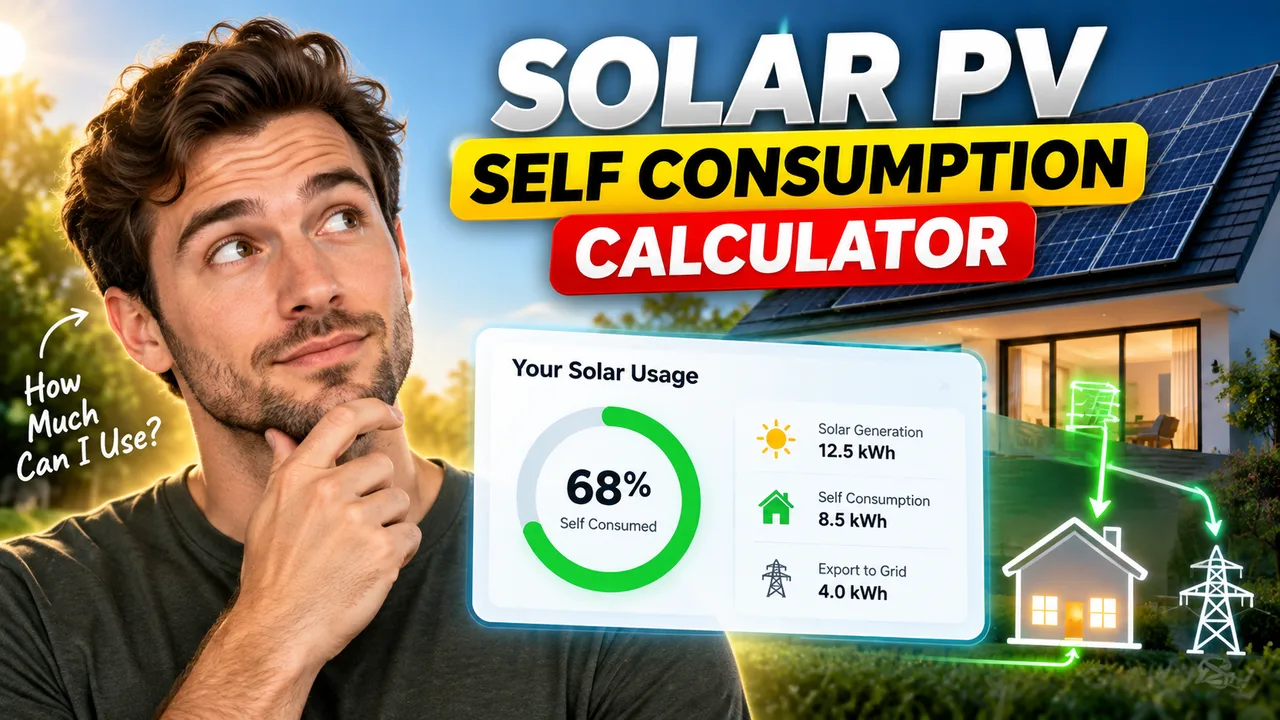
Use the Solar Pv Self Consumption Calculator to estimate on-site PV use, solar exports, self-consumption, and energy independence from your entered energy data.
Please complete this field to continue.
Please complete this field to continue.
Please complete this field to continue.
Results
Solar Pv Self Consumption Calculator
TL;DR Summary
The Solar Pv Self Consumption Calculator estimates how much of your generated solar PV electricity is used on site, how much is exported to the grid, and what percentage of your PV generation is self-consumed. It is an energy estimate based on the figures you enter and does not replace detailed system monitoring, engineering analysis, or utility records; the supplied tool information does not establish a specific data-storage or server-processing policy.
About the Solar Pv Self Consumption Calculator
The Solar Pv Self Consumption Calculator helps homeowners, property owners, businesses, solar planners, and other PV users understand how much of their solar electricity is actually used at the site where it is generated. This is useful because solar production and electricity demand do not always happen at the same time. A PV system can produce electricity during daylight hours while a building may use more or less electricity at that moment.
When solar generation is higher than the site's immediate electricity demand, some of the generated energy may be exported to the electrical grid. The portion of PV energy that is used on site is the key figure behind solar self-consumption. The U.S. Department of Energy explains that solar customers can use electricity generated by their systems and send excess generation back to the grid. :contentReference[oaicite:0]{index=0}
This calculator uses three energy figures: total PV energy generated, total electricity consumed, and solar energy exported to the grid. All three values should cover the same measurement period. You can use a day, month, year, billing period, or another consistent period for which reliable energy data is available.
What You Enter
- PV Energy Generated: The total electricity produced by the solar PV system during the selected period, in kilowatt-hours (kWh).
- Total Electricity Consumption: The total electricity used by the home, building, or site during the same period, in kWh.
- Solar Energy Exported to Grid: The amount of PV electricity sent to the grid during the same period, in kWh. Enter zero when there was no export.
Using measurements from the same period is important. For example, do not combine annual PV production with one month's electricity consumption. Mismatched periods can produce results that do not represent the actual operation of the system.
What the Calculator Produces
The calculator returns several related results:
- Solar PV Used On Site: The portion of generated PV energy that was not exported.
- Solar Energy Exported: The amount of PV energy entered as exported to the grid.
- Self-Consumption Ratio: The percentage of generated PV energy that was used on site.
- Solar Self-Sufficiency: The percentage of total electricity consumption supplied by the site's PV energy under the calculation assumptions.
- Grid Electricity Required: The portion of site electricity consumption not supplied by the calculated on-site PV use.
These measures describe different aspects of a solar system. A high self-consumption ratio means a large share of the PV electricity generated during the period was used on site rather than exported. Solar self-sufficiency answers a different question: how much of the site's total electricity demand was supplied by the PV energy used on site.
How to Use
- Step 1: Enter the total PV electricity generated during the period you want to analyze, in kWh.
- Step 2: Enter the site's total electricity consumption for that exact same period, in kWh.
- Step 3: Enter the amount of solar electricity exported to the grid during that period, in kWh. Enter zero if there was no export.
- Step 4: Review the calculated solar energy used on site, export, self-consumption ratio, self-sufficiency, and grid electricity required.
- Step 5: Compare the results with your inverter, energy monitor, utility meter, or other reliable records when making system or financial decisions.
Technical Explanation and Formula
The standard energy-balance approach used here starts with the PV energy generated and subtracts the PV energy exported to the grid. The remaining PV energy is treated as solar energy used on site, provided that the entered values are internally consistent.
Solar PV Used On Site = PV Energy Generated − Solar Energy Exported
Where:
- PV Energy Generated is measured in kWh.
- Solar Energy Exported is measured in kWh.
- Solar PV Used On Site is measured in kWh.
The self-consumption ratio is then:
Self-Consumption Ratio = (Solar PV Used On Site ÷ PV Energy Generated) × 100
This expresses the share of generated PV energy that was used at the site. A Sandia National Laboratories PV Performance Modeling Collaborative report describes the self-consumption ratio as the share of locally produced PV energy used on site. :contentReference[oaicite:1]{index=1}
The calculator also estimates solar self-sufficiency:
Solar Self-Sufficiency = (Solar PV Used On Site ÷ Total Electricity Consumption) × 100
This is different from self-consumption. Self-consumption focuses on the destination of generated solar energy. Self-sufficiency focuses on the share of the site's electricity demand that is supplied by the calculated on-site PV energy.
Finally, the estimated grid electricity requirement is:
Grid Electricity Required = Total Electricity Consumption − Solar PV Used On Site
No intermediate rounding is used in the calculation. Displayed energy results are rounded to two decimal places, and percentage results are displayed to two decimal places.
Worked Example
Suppose a PV system generates 6,000 kWh during a selected period. The site consumes 9,000 kWh, and 1,500 kWh of the solar generation is exported to the grid.
| Measurement | Value |
|---|---|
| PV energy generated | 6,000 kWh |
| Total electricity consumption | 9,000 kWh |
| Solar energy exported | 1,500 kWh |
| Solar PV used on site | 4,500 kWh |
| Self-consumption ratio | 75% |
| Solar self-sufficiency | 50% |
| Grid electricity required | 4,500 kWh |
In this example, 75% of the generated PV electricity was used on site and 25% was exported. The PV energy used on site supplied 50% of the site's total electricity consumption.
Understanding the Results
Self-consumption is affected by the relationship between solar production and electricity demand. If much of a site's electricity use occurs while the PV system is producing electricity, more generated solar energy may be consumed on site. If electricity demand is low during periods of high PV production, more solar energy may be exported.
The U.S. Department of Energy notes that solar production and electricity demand vary over time and that solar generation may cover part, all, or more than the electricity demand at a particular time. :contentReference[oaicite:2]{index=2}
The amount of electricity a PV system produces can also depend on factors such as solar resource, system design, orientation, temperature, and other operating conditions. DOE explains that PV system performance depends on the characteristics of the PV system and the solar resource available to it. :contentReference[oaicite:3]{index=3}
Why Use This Solar Pv Self Consumption Calculator & How Our Calculator Beats the Competition
The practical value of this calculator is that it turns three energy measurements into several related indicators without requiring a manual calculation. It is intended as a straightforward way to interpret already-known PV generation, site consumption, and export data. It should not be treated as a claim that it replaces detailed PV modeling or professional engineering software.
| Method | Ease of Use | Calculation Process | Best For | Limitations |
|---|---|---|---|---|
| Toolhox Calculator | Enter three energy values | Automatic energy-balance calculation | Quick self-consumption estimates | Depends on the quality and consistency of entered data |
| Manual Calculation | Requires arithmetic | User performs each formula | Checking individual calculations | More opportunity for input or arithmetic errors |
| Spreadsheet | Requires setup | Formulas must be created or maintained | Repeated analysis and custom records | Requires spreadsheet setup and data management |
| Professional PV Software | Usually more involved | May model many system and operating variables | Detailed PV system analysis and design | More information and modeling work may be required |
Assumptions and Limitations
This calculator is an estimate based on aggregate energy figures. It assumes that PV generation, electricity consumption, and solar export are measured over the same period and that the entered export represents PV energy sent to the grid. It does not independently measure electricity flows or retrieve data from an inverter, smart meter, utility, battery, or solar monitoring platform.
The calculation also assumes that PV generation minus exported solar energy represents the PV energy used on site. The inputs must therefore be internally consistent. If the entered exported energy is greater than generated PV energy, the calculator rejects the input. It also rejects a combination where calculated solar energy used on site exceeds total electricity consumption.
Battery storage can make real-world energy accounting more complex. For example, PV energy may charge a battery and later supply the building. A simple aggregate calculation based only on PV generation and grid export may not describe every battery energy flow or account for charging and discharging losses. Users analyzing solar-plus-storage systems should use interval data or dedicated storage modeling when those details matter.
The calculator does not determine electricity rates, utility compensation, net-metering credits, tax incentives, system payback, return on investment, PV production forecasts, panel degradation, shading losses, or system design requirements. Those questions require additional information and, where appropriate, utility records or professional analysis. DOE notes that solar savings can depend on electricity consumption and how a utility compensates customers for excess solar energy. :contentReference[oaicite:4]{index=4}
Do not rely on this result alone for equipment sizing, electrical design, interconnection decisions, financial commitments, or other decisions that require detailed system information. For those uses, compare the result with appropriate monitoring data and qualified professional advice.